Dynamic Stories: Time to Rock and Not Roll
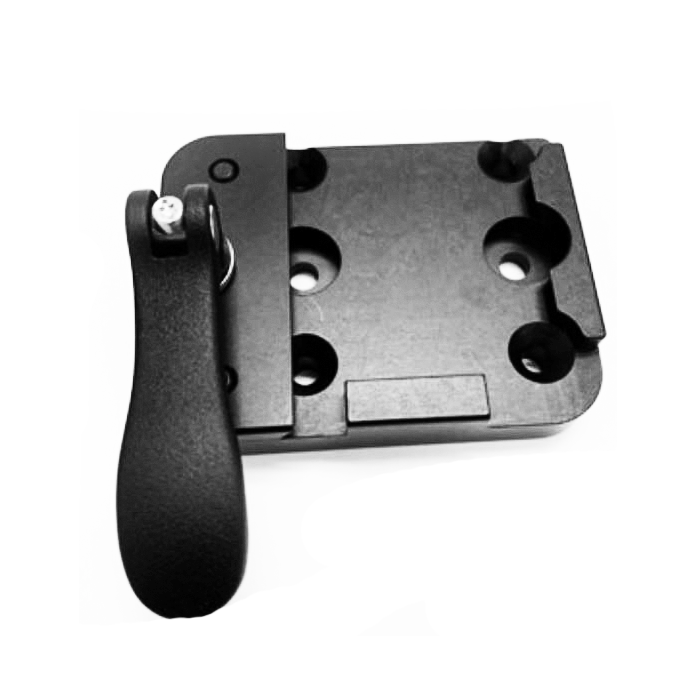
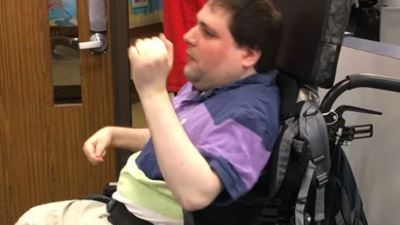
Phillip is a mover and a shaker – literally! This adult with developmental disabilities likes to move. He lives at a residential facility in Delaware. Years of rocking in his manual wheelchairs have left a trail of destruction. He has broken seating systems, mounting hardware, and wheelchair frames as a result of repeated and often strong movements.
Achieving Head Alignment through Movement
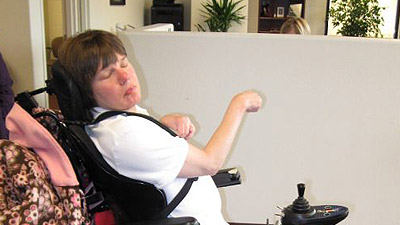
Vince is a young adult with the diagnosis of cerebral palsy. He had significant muscle tone throughout his body and frequently extends in his current wheelchair seating system. We were anxious to explore dynamic seating options to diffuse some of this extensor tone.
Dynamic Head Supports – the importance of design in meeting client goals
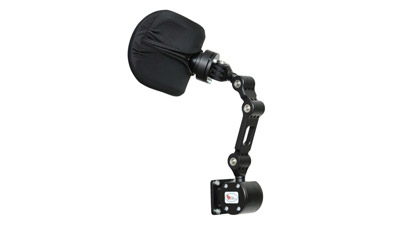
In our last blog, we discussed clinical indicators and contra-indicators to allowing movement into neck extension using a dynamic head support. Dynamic movement in this area can protect the head support hardware from damage, limit client injury, and reduce overall extensor tone. How does design facilitate these goals?
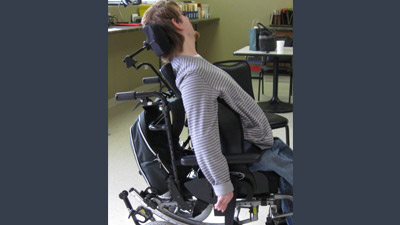
3 Reasons to Allow the Neck to Extend
In previous blogs, we have discussed clinical indicators for providing dynamic movement at the hips and knees. Another location dynamic movement can be provided is at the neck through Dynamic head support mounting hardware.
Karen “Missy” Ball, PT, MT, ATP
PhysioBall Therapy, LLC Metairie, LA “I have used dynamic backs several times in the past for clients with head trauma…
Supplier Interview: Concussions don’t Just Happen in Football
Recently I had a nice conversation with a colleague about Dynamic Seating. Joe McKnight is Director of Business Development in California, Nevada, and Arizona for Numotion, and he has been in the wheelchair seating and mobility field for a long time – probably longer than he would like to admit! Having that much experience provides a unique view. Joe states that “how we practiced 30 years ago and how we practice now should be different. We need to re-evaluate how we are doing things and how we need to change.”
Robert J. (Joe) McKnight, ATP/SMS, CRTS
Director of Business Development – California, Nevada, Arizona Numotion Cerritos, CA “The use of a dynamic headrest on this kind…
- « Previous
- 1
- …
- 6
- 7
- 8