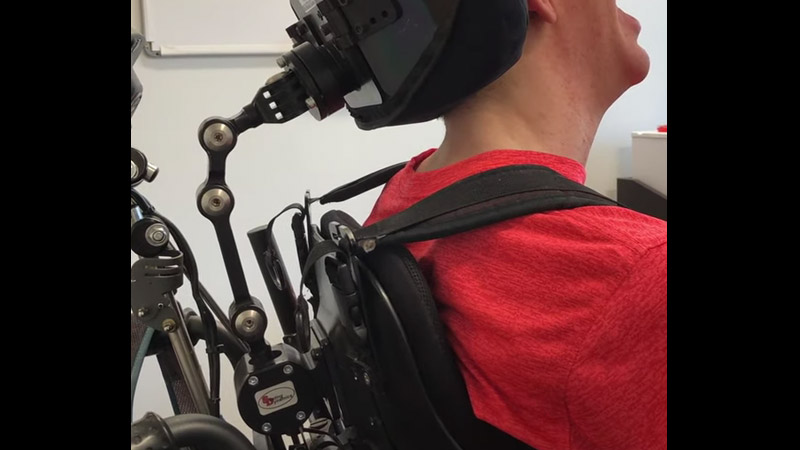
Inhibiting Max’s Strong Neck Extension with Dynamic Head Support Hardware
Max is an adult with cerebral palsy and significant extensor tone. His Baclofen pump was recently removed secondary to an infection. This has led to strong neck hyperextension and rotation.
My Client isn’t Moving as Much – What Happened?
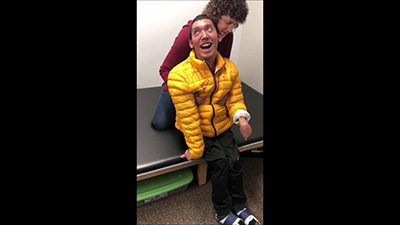
Dynamic Seating is designed to provide movement; however, client movement may actually decrease after using Dynamic Seating for a while. Why?
Quick Class: How to Determine Resistance for Dynamic Head Support Hardware
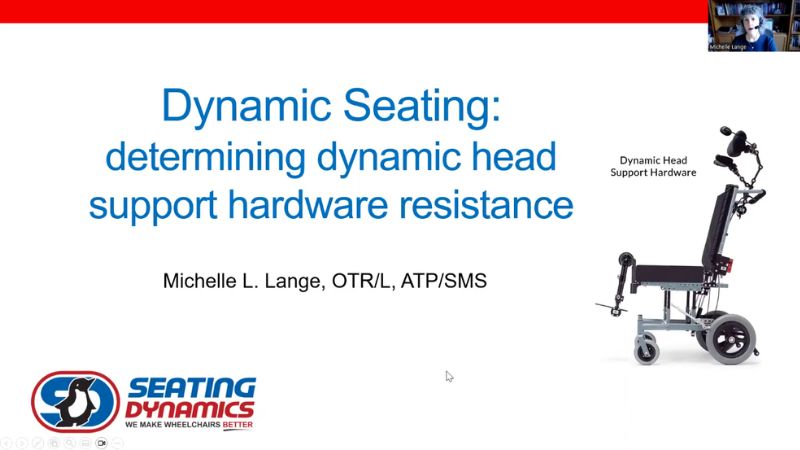
The optimal level of resistance is critical to the functioning of Dynamic Head Support Hardware. In this Quick Class, we will review how to determine resistance based on specific client parameters.

Sara: a mover and a shaker!
Sara has a diagnosis of cerebral palsy and seizures. She has a long history of destroying footrests with aggressive movement in her wheelchair, Dynamic Seating has helped.

Phillip – Before and After Dynamic Seating
On the left, Phillip had rocked so much in his static wheelchair that the frame was worn to the point of allowing excessive movement. On the right, he is enjoying the smooth rocking movement of the Seating Dynamics Dynamic Rocker Back interface which allows him to move and maintains frame integrity.
Quick Class: Dynamic Seating Durability – Travel, Resistance and Design
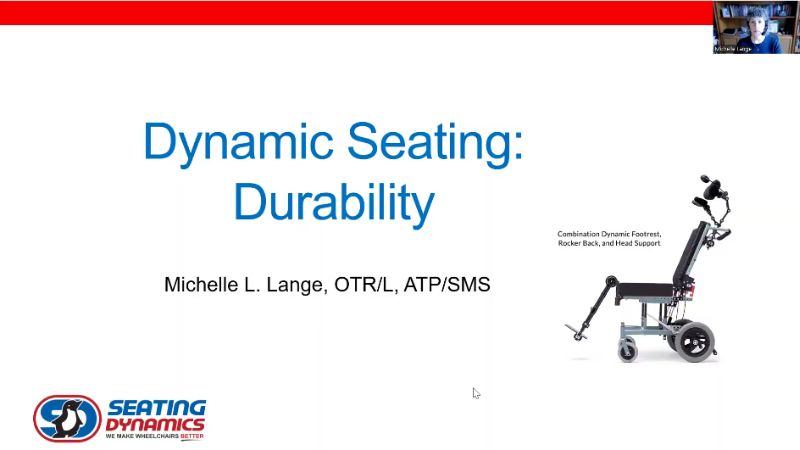
Dynamic Seating is often used to prevent equipment breakage, specifically the wheelchair frame and seating system. The Dynamic components absorb strong, repeated, sudden, and/or sustained forces, hence protecting vulnerable areas of the seating and mobility base. But what about the Dynamic Components themselves? Just how durable are these?
Quick Class: How Dynamic Seating Can Improve Wheelchair User Function
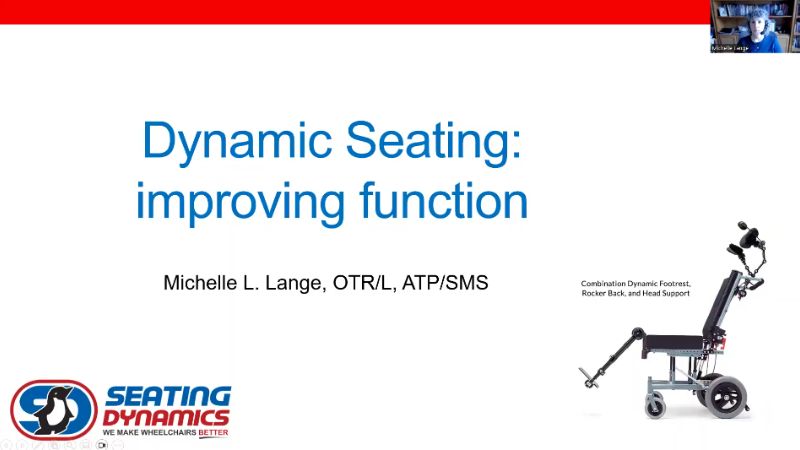
Dynamic Seating can improve function, including medical functioning. This Quick Class reviews specifics supported by research.
Quick Class: How Dynamic Seating Can Improve Postural Control and Stability
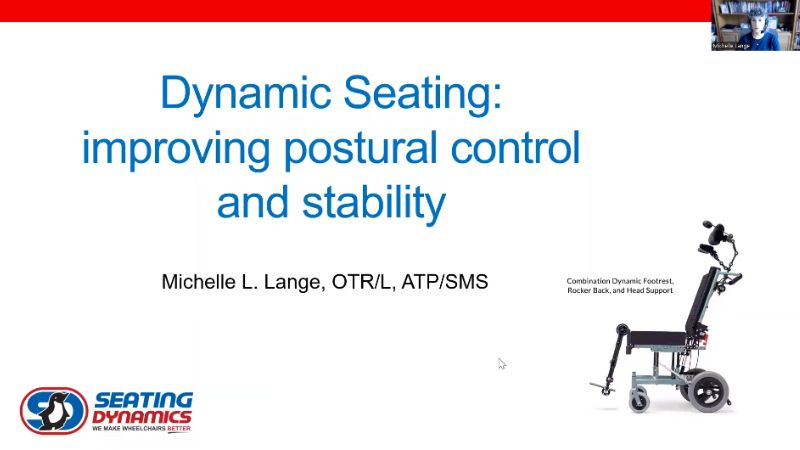
Dynamic seating provides resistance to movement initiated by the wheelchair user, usually through spring or elastomer type mechanisms or other resistive, but mobile components. Movement against resistance has been demonstrated to increase strength in people with increased muscle tone without an increase in spasticity. Increased muscle strength can, in turn, improve both postural control and functioning.
Quick Class: How Dynamic Seating Supports Movement and Sensory Needs in Wheelchair Users
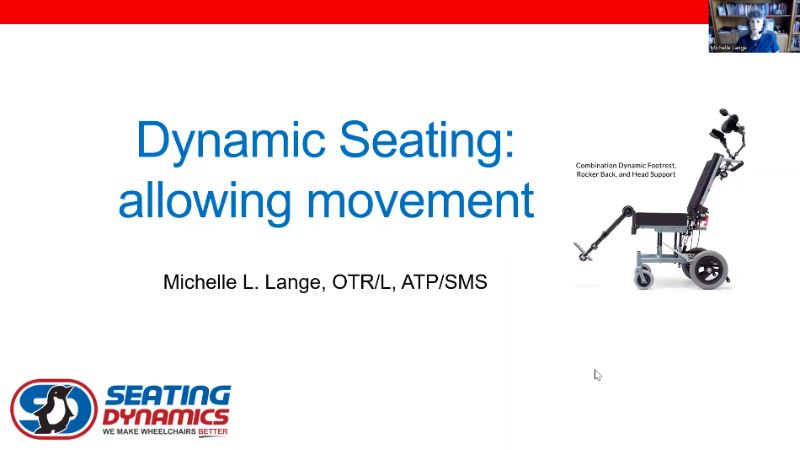
Dynamic Seating moves in response to client forces. Many clients move, not due to increased extensor tone, but rather for the explicit purpose of moving. We all tend to seek out movement. We are wired to move, and movement has so many benefits.
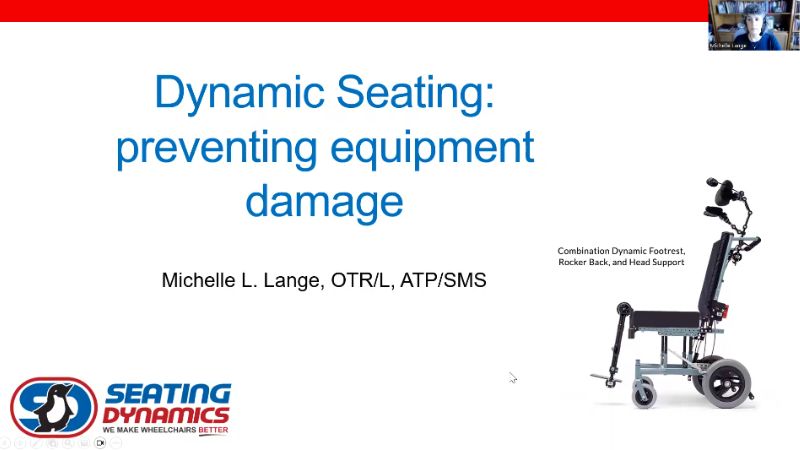
Quick Class: How Dynamic Seating Can Help Prevent Wheelchair Equipment Damage
The forces from extension on a static wheelchair seat and frame can be so strong as to cause damage to equipment. Hardware used to mount the seating system and components (such as a head support), are particularly susceptible to damage.