
Dear CMS…A Technician’s Perspective
In 2022, CMS published a proposed fee schedule for Dynamic Backs, and many people answered the call to provide comments on this important topic. The proposed fee schedule was based on comparing a Dynamic Back to a shock absorber. Unfortunately, CMS decided not to receive comments right before a public meeting on this topic, stating that a final decision had already been made. We have been periodically sharing comments that were submitted so these voices can be heard.
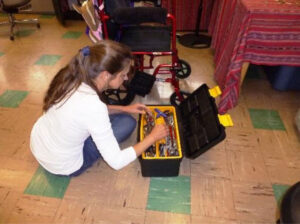
Judy Garber is an Adaptive Equipment Technician with Skills of Central PA, Inc. and past ATP. She has been adapting and customizing positioning equipment and wheelchair seating for the last 40 years! Here is what she wrote to CMS:
 “Dynamic seating has been a game changer for those with disabilities who also contend with abnormal muscle tone and movement disorders (athetosis, dyskinesia, dystonia...). For those of you who have not yet comprehended the difference between a Dynamic Back and a shock absorber, please read on.”
“A shock absorber (code #E1015) on a wheelchair reduces the jolt and jarring impact to the wheelchair rider when encountering environments where terrain is uneven/unpaved (i.e., threshold strip, broken macadam (paved surface), curb drop, railroad crossing). The shock absorber is an environmental impact solution.”
“A Dynamic Back allows voluntary, involuntary or exaggerated movements (spasms, increased muscle tone, momentum) to play out by allowing the intersection of the wheelchair seat and back frame angle to expand momentarily and to absorb the impact of the rider's body movements. Once the rider relaxes, the frame angle returns to the desired position (like a spring when stretched and then released). The benefit of this movement is reduced skin shear, reduced pain/cramping of the involved muscles, improved control over movement, reduced contact pressure from the seating surface, and less restriction of movement. The Dynamic Back also reduces or eliminates frame fracture, torque, and other damage, resulting in a safer seating solution.”
Client Examples:
“AD - diagnoses include cerebral palsy (CP), dystonia, and spasticity. A Dynamic Back eliminated hip flexion pain by allowing her to extend her hips periodically while sitting. She also uses hip extension to communicate a ‘yes’ response to questions (despite also having access to a communication device) - her preference. Note - The Dynamic Back was denied on her current wheelchair resulting in increased hip pain while sitting, less tolerance for sitting, increased medical procedures/medications, frequent adjustments to her seating, and incremental (if any) success. She is a very active and social young lady, so keeping her in bed all the time is not an option, and not beneficial to her mental health.”
“LV - diagnoses include choreo-athetoid CP with spastic quadriplegia. His Dynamic Back has improved his comfort in his wheelchair and put an end to broken back canes by allowing his seat to back angle to expand with his body when he is ‘dancing’ to music or responding to excitement.”
“JR - diagnoses include CP with spastic quadriplegia, and dyskinesia. His Dynamic Back has put an end to broken back canes and allows his seat to back angle to expand with his body when he is ‘dancing’ to music or when imitating celebrity wrestlers.”
“There are several more individuals our company serves who have benefitted greatly from having a Dynamic Back on their wheelchairs. As you can surmise, a shock absorber does not provide the same type of benefit as a Dynamic Back. The two features have unrelated benefits and costs. Any one of us could find ourselves using a wheelchair at any moment. Comfort and function are EVERYTHING!”
Judy Garber, AET
Adaptive Equipment Technician